
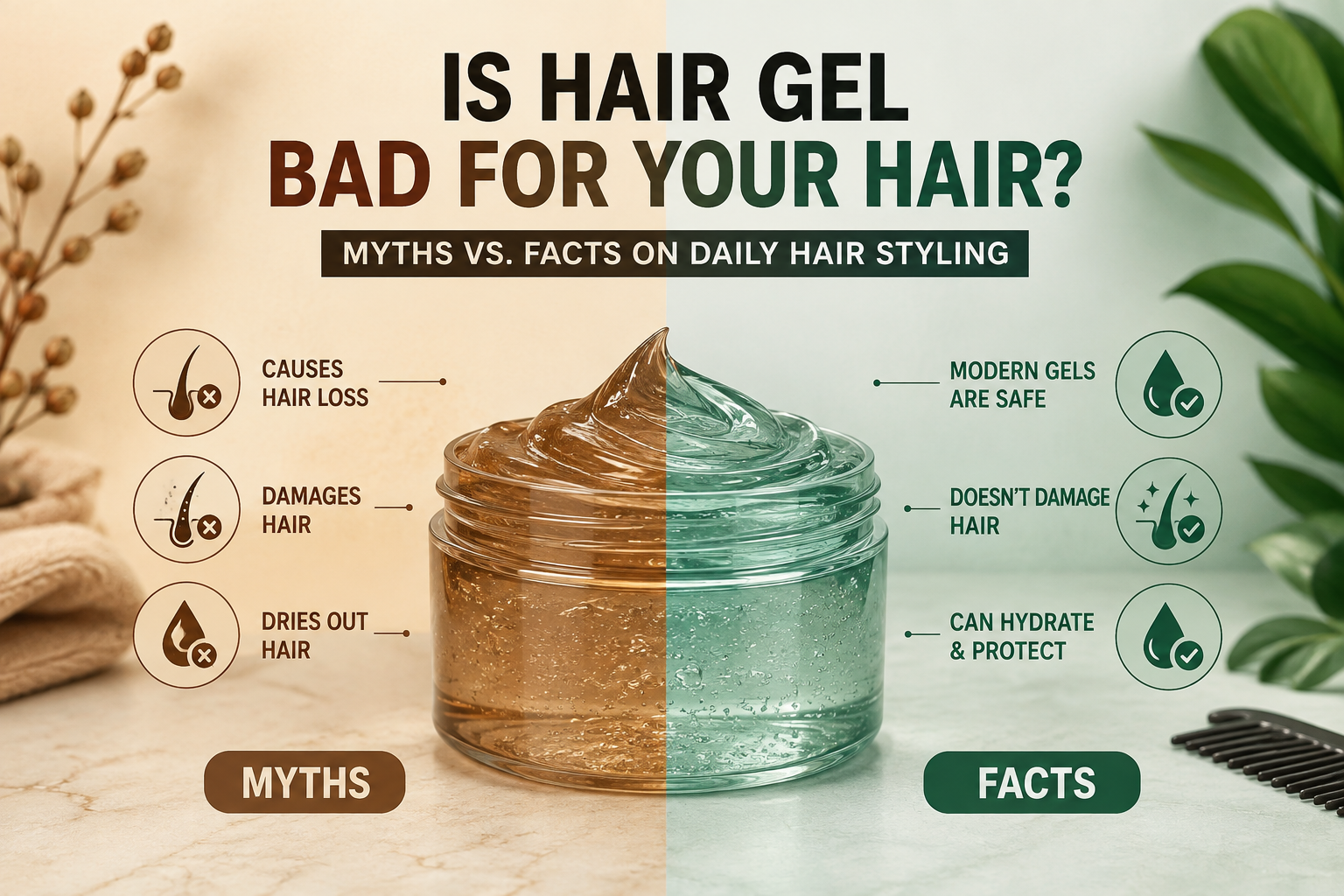
Does daily hair gel cause hair loss or scalp build-up?
Daily hair gel does not cause genetic hair loss, as growth occurs deep within follicles. However, leaving gel on overnight leads to scalp build-up, clogging pores, causing irritation, and making strands prone to breakage. Using alcohol-free formulas and cleansing regularly ensures safe daily hair styling without follicle damage.
Hair gel has been a staple in daily hair styling routines for decades, offering everything from subtle control to rock-solid hold. Yet, a persistent question worries daily users: Is hair gel bad for your hair?
If you have ever noticed extra strands in your brush or felt an itchy, flaky scalp after days of continuous styling, it is natural to wonder whether daily hair gel causes hair loss or scalp build-up.
To separate exaggerated internet rumors from trichological reality, here is a breakdown of the myths, facts, and best practices for safe daily hair styling.
Myths vs. Facts: The Truth About Daily Hair Gel Use
Myth 1: Daily hair gel use directly causes male or female pattern baldness.
- Fact: Hair gel does not cause genetic hair loss.
Male and female pattern baldness (androgenetic alopecia) is driven by genetics and sensitivity to hormones like dihydrotestosterone (DHT), operating deep within the hair follicle beneath the scalp surface. Hair gel acts strictly on the external hair shaft. It cannot shrink hair follicles or alter your genetic predisposition to thinning.
Myth 2: Scalp build-up from gel suffocates hair roots and permanently stops hair growth.
- Fact: Gel residue does not “suffocate” hair roots, but severe build-up can irritate the scalp.
When unwashed hair gel mixes with natural sebum, sweat, and dead skin cells, it creates hair gel scalp build-up. While this will not permanently stop growth, clogged pores can trigger conditions like folliculitis (inflamed hair follicles), seborrheic dermatitis, or chronic itching. Scratching an irritated scalp can damage hair roots and lead to temporary shedding (telogen effluvium).
Myth 3: All hair gels strip moisture and ruin your hair structure.
- Fact: Damage depends entirely on the formulation.
Traditional, low-quality gels contain short-chain drying alcohols (such as Isopropyl Alcohol or Ethanol) designed to make the product dry quickly. These alcohols strip hair of its natural protective lipids, leaving strands dry and brittle. However, modern formulations often feature hydrating ingredients like aloe vera, panthenol, and fatty alcohols (Cetyl Alcohol) that provide hold without drying out the hair shaft.
Myth 4: Rinsing with plain water is enough to clean out daily gel residue.
- Fact: Water alone cannot completely dissolve styling polymers.
Hair gels rely on film-forming polymers and resins to lock hair in place. Many of these ingredients resist simple water exposure. Relying solely on water rinses leaves microscopic film on both your hair strands and scalp, leading to cumulative product accumulation over time.
Hair Breakage vs. Hair Loss: Knowing the Difference
Many people confuse hair breakage with actual hair loss:
| Characteristic | Hair Breakage (Styling Damage) | Hair Loss (Follicle Shedding) |
| Origin | Along the hair shaft | From the root/follicle |
| Appearance | Short, snapped pieces without a white bulb | Full-length strand with a small white bulb at the end |
| Primary Cause | Mechanical strain, drying alcohols, aggressive brushing through dried gel | Genetics, hormonal shifts, nutritional deficits, severe scalp inflammation |
| Reversibility | Highly reversible with gentler handling and moisture | Requires targeted medical or scalp treatments |
When gel hardens, it fixes hair strands into rigid positions. If you attempt to comb, brush, or restyle hair while the gel is completely dry, the mechanical stress snaps the rigid strands. This creates the illusion of thinning, even though the root remains healthy inside the scalp.
the gel’s polymer bonds. Brushing dry, hardened gel acts like sandpaper on the hair cuticle and inevitably causes mechanical snapping.
5 Rules for a Safe Daily Hair Gel Routine
You do not need to give up styling gel to maintain healthy hair. Following these simple guidelines keeps your scalp clean and your strands intact:
1. Opt for Alcohol-Free Formulations
Look for products explicitly labeled alcohol-free. Prioritize ingredients that offer nourish-and-hold benefits, such as vegetable glycerin, aloe vera, plant oils, or pro-vitamin B5 (panthenol).
2. Apply Product to Hair Strands, Not the Scalp
When styling, apply gel starting at mid-length down to the tips. Avoid rubbing styling products directly into the scalp. Keeping the scalp clear reduces pore clogging and minimizes the risk of irritation.
3. Never Sleep with Dried Gel in Your Hair
Friction against your pillow while you sleep can snap hardened, gel-coated hair strands. Furthermore, leaving product on overnight encourages product transfer to your face and pillowcase, exacerbating both scalp irritation and facial breakouts.
4. Practice Proper Removal and Wash Regularly
- Daily Cleaning: Wash your hair with a gentle, sulfate-free shampoo to remove daily product residue.
- Periodic Clarifying: Use a clarifying shampoo once every 1–2 weeks to thoroughly dissolve stubborn polymer and silicone build-up.
5. Never Brush Dry, Gel-Coated Hair
If you need to restyle your hair during the day, dampen it with water first to break down the gel’s polymer bonds. Brushing dry, hardened gel acts like sandpaper on the hair cuticle and inevitably causes mechanical snapping.
Use a clarifying shampoo once every 1–2 weeks to thoroughly dissolve stubborn polymer and silicone build-up. For deep product accumulation or scalp detoxing, explore our professional hair care services.
Frequently Asked Questions (FAQs)
Can hair gel cause dandruff?
Hair gel does not directly cause dandruff (which is primarily linked to an overgrowth of Malassezia yeast). However, dried gel flakes can closely resemble dandruff. Additionally, product build-up can trap oils and dead skin, creating an ideal environment for yeast overgrowth and scalp irritation.
How often should I wash my hair if I use gel every day?
If you apply gel daily, you should ideally cleanse your hair daily or every other day with a mild shampoo. Allowing product to remain on the hair for multiple days increases the likelihood of scalp build-up and strand breakage.
Is hair gel safer than hair wax or pomade?
Neither is inherently “safer”—they serve different styling needs. Gels provide strong hold with a dry finish but can contain drying alcohols. Waxes and pomades offer flexible hold and shine but are often oil- or wax-based, making them harder to wash out and more likely to leave heavy residue on the scalp if not cleansed thoroughly.
What should I do if I notice hair gel build-up on my scalp?
Rinse your hair with warm water and use a dedicated clarifying shampoo, massaging gently with your fingertips (not nails) to loosen residue. Follow up with a deep scalp treatment or hydrating hair spa.
Elevate Your Daily Styling & Scalp Care Routine
Is hair gel bad for your hair? No, provided it is used correctly. By using alcohol-free products, washing regularly, and getting professional scalp detoxes, you can maintain great style without compromising your hair health.
If you are dealing with product build-up, dry ends, or need expert guidance on finding the right styling products for your hair type, let our professional stylists take care of you.
Papa Bear Unisex Salon
Visit Papa Bear Unisex Salon on Google Maps for professional hair cuts, nourishing hair spas, and customized scalp treatments.
👉 Ready for healthier, better-styled hair? Book an appointment with Papa Bear Unisex Salon today!